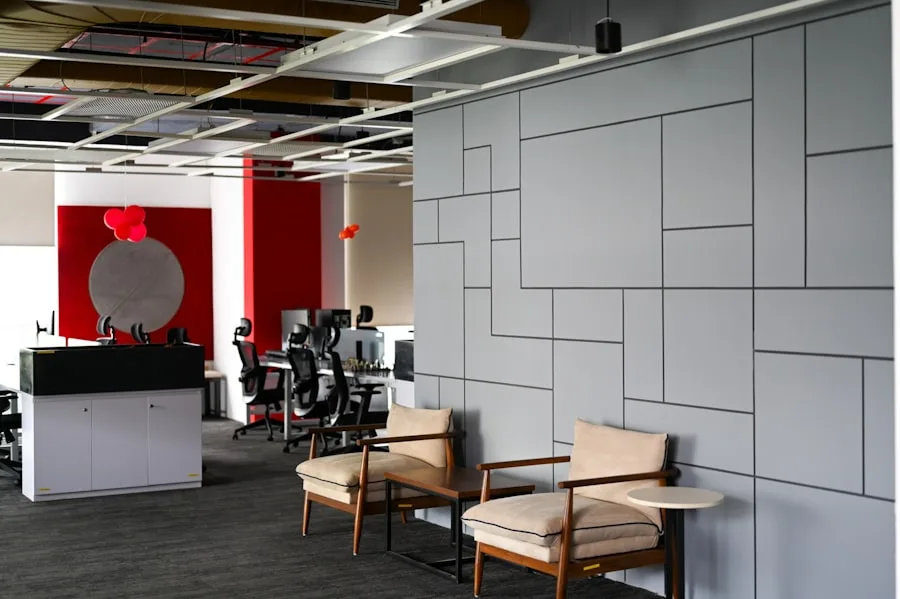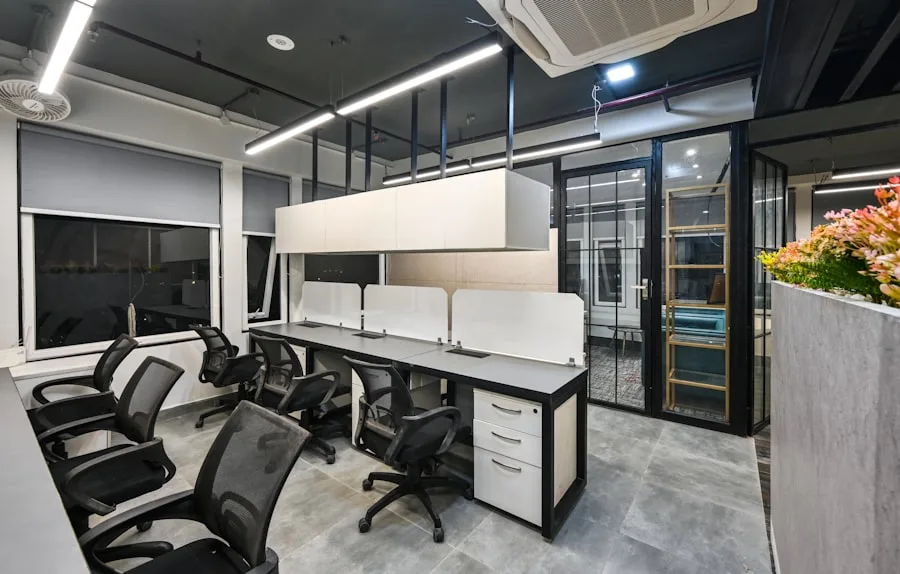
The human body did not evolve under a 4000K LED panel running at a constant 500 lux from 9am to 6pm. For most of human history, light changed continuously through the day — brighter and bluer in the middle of the day, warmer and dimmer toward evening. Modern buildings have largely ignored this. Human-centric lighting (HCL) is the discipline of bringing that variation back, deliberately, using controllable lighting systems.
The biology in brief
The retina contains a third type of photoreceptor beyond rods and cones — intrinsically photosensitive retinal ganglion cells (ipRGCs), which are particularly sensitive to short-wavelength (blue) light around 480nm. These cells feed the suprachiasmatic nucleus in the hypothalamus, the brain's master circadian clock. The clock regulates cortisol production, melatonin suppression, core body temperature, alertness, and mood — all on a roughly 24-hour cycle.
When the light environment in a building ignores this system — maintaining the same CCT and intensity all day — the body's circadian clock gets inaccurate signals. Afternoon energy crashes become more severe. Sleep quality suffers. Melatonin suppression at the wrong time makes it harder to wind down in the evening. Over months and years, disrupted circadian rhythm is associated with elevated risk of metabolic and mood disorders.
This isn't fringe research. The discovery of ipRGCs was awarded the Nobel Prize in Physiology or Medicine in 2017. The WELL Building Standard, now adopted by major corporate real estate developers globally, includes circadian lighting as a core criterion.
What HCL looks like in an office
The implementation is simpler than the biology. Tunable white lighting — luminaires and drivers capable of varying both intensity and colour temperature across the day — follows a schedule that approximates the natural light curve:
- Morning (7–10am): 5000–6500K, 400–500 lux. High blue content to suppress residual melatonin and promote morning alertness. The equivalent of outdoor morning light.
- Midday (10am–2pm): 4000–5000K, 500 lux. Peak intensity and moderate colour temperature for sustained concentration and focus work.
- Afternoon (2–5pm): 3500–4000K, gradually reducing to 350–400 lux. The natural post-lunch dip becomes less severe when the light environment shifts slightly warmer and dimmer — counterintuitively, this is more effective than blasting higher intensity.
- Late afternoon / end of day (5–7pm): 2700–3000K, 200–300 lux. Warm, lower-energy light that begins the biological wind-down process and supports the transition to evening.
The transitions between these states are gradual — 30 to 60 minutes — so they're imperceptible to occupants. Nobody notices the colour temperature shifting. They just notice that the 3pm slump is less bad than it used to be.
How Casambi enables it
HCL requires three things from a control system: the ability to dim continuously across the full range, the ability to shift colour temperature continuously, and the ability to do both on an automated time schedule without manual intervention.
Tunable white drivers
Casambi-compatible tunable white drivers control two LED channels independently — a warm white channel and a cool white channel — and blend between them to hit any target colour temperature across the driver's range (typically 2700K to 6500K). The same driver handles the dimming. A single Casambi driver replaces what previously required two channels and a separate controller.
Time-based automation
Casambi scenes can be scheduled to activate automatically at set times, or to fade gradually between states on a timer. The HCL schedule is built once in the app, assigned to the relevant luminaire groups, and runs without any daily intervention. Adjustments — if the schedule needs to shift for seasonal day length changes, or a tenant requests a different profile — are made in the app and take effect immediately.
Sensor integration
Casambi daylight sensors can modulate the intensity portion of the HCL profile based on actual daylight levels — so on a bright day with significant natural light, the artificial contribution is reduced to maintain target lux levels without over-illuminating. The colour temperature schedule runs independently of the daylight sensor, maintaining the circadian signal regardless of how much sky light is entering the space.
Does it require expensive fixtures?
This is the question we get most often, and the answer is no — not anymore. Three or four years ago, tunable white was largely the province of premium architectural luminaires at significant cost premiums. The driver market has caught up. Casambi-compatible tunable white drivers are now available in the same wattage classes as standard drivers, at price points that make HCL viable for ordinary commercial fit-outs, not just flagship buildings.
The fixture specification doesn't need to change either — any fixture with a tunable white LED module can be driven by a Casambi tunable white driver. For retrofit projects (see our guide on lighting retrofit), the driver swap approach applies here too: existing fixtures, new smart driver, immediate HCL capability.
The business case for tenants and landlords
Human-centric lighting is increasingly cited in tenant attraction and retention conversations, particularly for tech companies, financial services firms, and any organisation competing for talent that has expectations about workplace quality set by premium employers globally.
The quantified benefits most commonly cited in the literature:
- Reported reduction in afternoon productivity dip of 10–15% in controlled studies
- Reported improvement in sleep quality scores among office workers in buildings with circadian lighting programmes
- Reduced eyestrain complaints — a consistent finding in tunable white deployments versus fixed-CCT environments
- WELL Building Standard certification credit, which is increasingly a lease requirement for multinational tenants
For landlords, a building with certified HCL capability commands a meaningful premium in both rent and occupancy. For occupiers, the staff wellbeing and productivity argument is increasingly making its way into fitout briefs at the same level as air quality and ergonomic furniture.
Starting a human-centric lighting specification
The starting point for an HCL specification is the occupancy pattern — when do people arrive, what are the peak concentration periods, what time do most people leave, and does the space have any areas that need special treatment (high-daylight perimeter zones, windowless interior zones, video conferencing rooms where colour temperature affects camera white balance).
If you're working on a corporate fitout and want to build an HCL specification from the ground up, or retrofit an existing office floor with tunable white capability, we can help map the driver selection and schedule design for your specific layout. Get in touch with your floor plans and we'll take it from there.