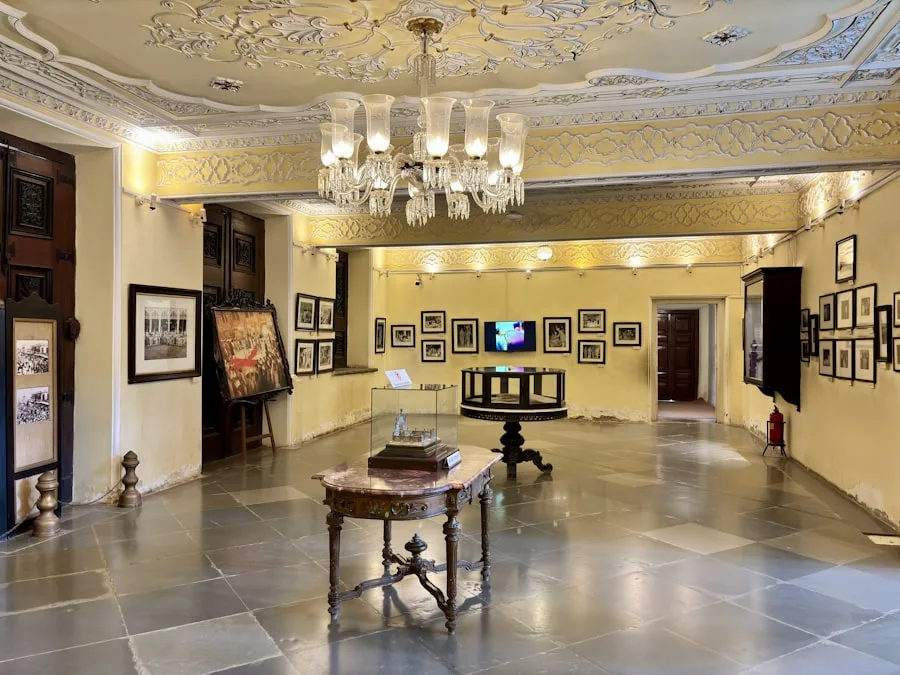
India has an extraordinary stock of heritage buildings — from colonial-era bungalows in Mumbai's Bandra to art deco apartment buildings in Colaba, Mughal-influenced havelis in Rajasthan, and mid-century institutional buildings in practically every city. Getting smart lighting into these spaces is one of the most rewarding and most technically constrained challenges in our industry.
Why heritage buildings are different
When a building is heritage-listed, grade-graded, or simply too architecturally significant to alter, the rules change. You can't chase cables through original limestone walls. You can't core through hand-laid terracotta floors. You can't surface-mount conduit on restored timber ceilings. In some cases you can't even fix a bracket to a wall without written approval from the relevant conservation authority.
Traditional wired DALI control — the go-to protocol for most commercial smart lighting — becomes almost impossible in these constraints. Every zone needs a control cable run, which means penetrations, conduit, and disruption to original fabric. For a heritage project, this is either prohibited outright or involves months of approvals and irreversible work.
Casambi was not specifically designed for heritage buildings, but its architecture fits their constraints almost perfectly.
What makes Casambi viable where wired control isn't
No control cable between devices
In a Casambi network, every device is a node in a self-healing Bluetooth 5 mesh. Switches talk to drivers. Sensors talk to switches. The network routes around obstacles automatically. There is no control bus, no dedicated two-wire run, no panel to feed. The only cable a Casambi driver needs is its power supply — which you're running anyway.
In practice, this means lighting control can be added to a heritage building using only the existing power infrastructure, with zero new penetrations required.
Battery-powered switches
Casambi's battery-powered push button switches are arguably the single biggest enabler for heritage projects. These devices pair directly to the Casambi mesh, require no mains wiring, and can be surface-mounted to virtually any material without a back box. A small amount of removable adhesive is all that's needed in conservation-grade situations.
They operate for years on coin cell or AAA batteries. When the battery is replaced (typically every 2–5 years depending on usage), the device automatically reconnects to the network. There is no programming required, no app needed, and no service visit for the end user beyond the battery swap.
Wireless occupancy and daylight sensors
Casambi occupancy sensors come in ceiling-mount and wall-mount variants, with wireless models that connect to the mesh without a wired control run. These can often be surface-mounted to original ceilings using simple screw fixings into a ceiling rose or recessed into existing light fittings where a small recess already exists.
Minimal footprint luminaires
Many heritage building luminaires are original or reproduction fittings. Casambi drivers can sit inside standard junction boxes or small enclosures within the existing electrical infrastructure — the driver changes, the fixture doesn't. For track lighting on restored timber beams, this is the difference between a reversible intervention (swapping the driver) and an irreversible one (cutting a chase for control wiring).
The Bluetooth range question
The most common concern we hear about Casambi in heritage buildings is radio frequency performance. Old buildings have thick walls — rubble stone, solid brick, reinforced concrete — that can attenuate Bluetooth signals. This is a genuine consideration, not a dismiss-and-move-on issue.
Casambi Bluetooth 5 mesh handles this better than most people expect. The mesh is self-healing: if a signal can't reach a device directly, it routes through intermediate nodes that can. The practical result is that a Casambi network with reasonable node density — typically one device every 8–12 metres in a straight run, or one per room for complex geometry — performs well even through 400mm solid brick walls.
For buildings with extreme wall thicknesses or significant RF shielding (lead-lined rooms, reinforced vaults), Casambi offers a wired ethernet gateway that bridges separate mesh networks. This is rarely needed, but it exists as an option when the physics genuinely don't cooperate.
Commissioning in a live heritage space
Heritage buildings are often in use while lighting works are underway — a hotel that can't close, a museum that's open to the public, a government building in continuous occupation. Casambi's commissioning workflow is designed for exactly this situation.
Each device is commissioned from a smartphone app, one at a time or in bulk, without any shutdown of the wider network. A single integrator can commission a 50-driver installation in a day, working room by room while the rest of the building operates normally. There is no central controller to program, no bus address to assign, and no physical wiring to the control panel that requires a power-down.
What to document for conservation authorities
If your project requires approval from the ASI, state heritage departments, or local conservation boards, a Casambi specification has a significant advantage in the application: the intervention is minimal and fully reversible.
A well-prepared application should document:
- That no new wiring penetrations are required beyond the power supply (which is typically already permitted)
- That switches are surface-mounted with reversible fixings and leave no permanent mark if removed
- That all Casambi devices can be removed and the space returned to its pre-intervention state without damage
- That driver changes are contained within existing electrical enclosures and don't alter original fabric
This reversibility argument is often the deciding factor in gaining approval for smart lighting upgrades in conservation-grade spaces where more invasive proposals would be rejected.
A practical example: A Mumbai art deco residential block
A recent project involved a residential apartment in a grade-2 listed art deco building in South Mumbai. The building committee had refused previous proposals for smart lighting on the grounds that any wired control system would require drilling through original mosaic floors and ornamental plasterwork ceilings — both listed elements.
The Casambi proposal used battery-powered switches in each room (surface-mounted to existing switch plates with no new back boxes), Casambi DALI drivers replacing the existing non-smart drivers within the same ceiling enclosures, and a single wireless occupancy sensor per room clipped to existing ceiling rose profiles.
Total penetrations to original fabric: zero. The building committee approved the proposal in one meeting.
Starting a heritage project with Casambi
The biggest complexity in heritage smart lighting isn't technical — it's the upfront survey. You need to understand the existing electrical infrastructure (what's already in conduit and what isn't), map the room geometry for mesh planning, and identify which luminaires are original versus replaceable.
If you're working on a heritage project and want a second opinion on whether Casambi is viable, get in touch. We've surveyed a range of conservation-grade buildings across Mumbai and can give you an honest assessment based on your specific constraints.