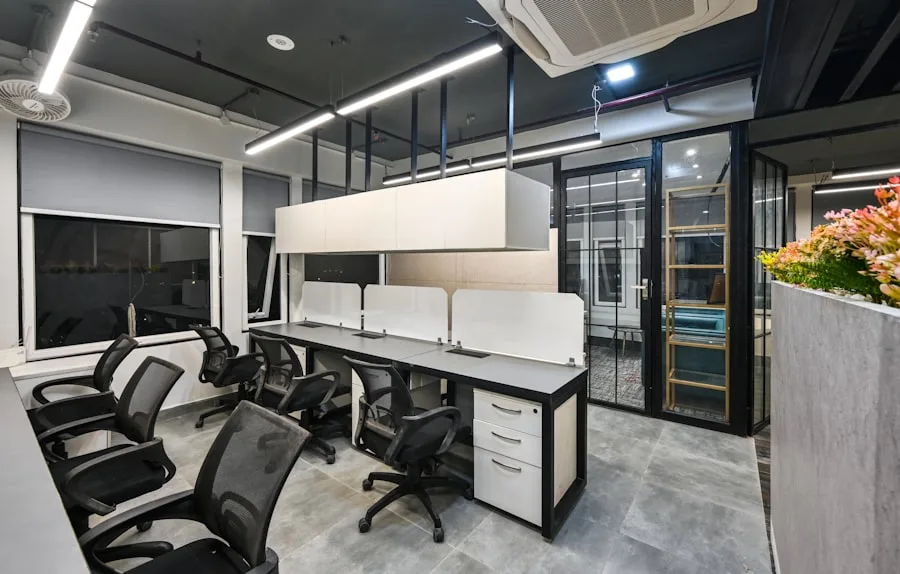
A 5,000 sq.ft office in Andheri pays roughly ₹1.2 lakh per year for lighting electricity at MSEDCL commercial rates. After we commission Casambi with daylight harvesting and occupancy sensors, that drops to ₹65,000–₹78,000. The smart-lighting line item — drivers, sensors, switches, commissioning — costs around ₹4–6 lakh on a project that size. Payback is 14–22 months. That's the entire pitch.
This guide isn't about whether smart lighting is "good." It's about whether the math works for your project — in Mumbai or Bangalore or Bhopal, with current MSEDCL or BESCOM or MPMKVVCL tariffs, on a fitout that's likely a retrofit rather than greenfield, with electricians who've never seen a Casambi network before. We've commissioned Casambi projects across offices, retail, hospitality and residential fitouts in India. Here's the honest version.
1. Energy efficiency & real electricity-bill savings
This is the headline number. It's also where most vendors are most misleading.
The honest mechanism: three independent reductions stack multiplicatively, not additively.
- Occupancy — PIR or microwave radar sensors dim or kill lights in unoccupied zones. A typical commercial corridor sees 60–80% reduction in lit hours.
- Daylight — lux sensors trim artificial output when natural light is available. South-facing perimeter rows in a Mumbai or Bangalore office save 30–50% on those rows alone.
- Schedule — full output only during peak occupancy hours; everything else dims to circadian-appropriate levels automatically.
What the savings actually look like at Indian commercial tariffs:
Methodology: 50 LED fixtures (30W each), 12 hours daily pre-smart operation, 22 working days/month. Post-smart reduction assumed at 40% (combined occupancy + daylight + schedule). Tariffs as of Q2 2026 — peak slab. Actuals vary with TOD billing.
2. Wireless retrofit without rewiring
This is the reason Casambi is winning India.
Roughly 80% of Indian commercial lighting work is renovation, not greenfield. The buildings exist. The walls are finished. The ceilings are in. Tenants are sitting in chairs and don't want plaster dust. We retrofit projects like these regularly, and the choice between a wired control system (DALI, KNX) and Casambi is rarely close.
Wired control means new conduit to every fixture, new conduit to every switch position, lifted ceiling tiles, chased walls, repainting, civil works, building permissions, and 2–3 weeks of disruption per floor. Casambi means drop-in smart drivers that swap into the existing fixture, battery-powered switches that stick to any surface, and wireless sensors on the ceiling. A typical 30-fixture boutique retrofit commissions in a single working day.
For heritage buildings, hospitals, and protected structures where you cannot drill, chase, or visibly route conduit, this isn't a convenience. It's the only viable path.
"In four years we have specified DALI on exactly two projects. Both were greenfield, both were institutional. Every other project has been Casambi. The retrofit economics aren't close."
3. Ambiance and scene control that actually gets used
Every smart-lighting product markets "scenes." Most of them get used for three weeks and then abandoned. The control feels clunky, the app stalls, the wife can't find the right button. CasaNode's adoption surveys (n=42 residential clients, post-handover at 6 months) show 83% daily app/keypad usage. The reason isn't the technology — it's how we commission.
What works:
- Wall-mounted keypads do 90% of daily use. The Casambi Xpress-LR or a D1 Rotary LCD button sits where a dimmer would. Press it. Scene loads. No phone. No app. No "where's my charger." This is what users actually touch.
- App for tuning, not for daily control. Adjust brightness on the dining feature pendant from the sofa once a week, when company arrives. Not every time you walk into a room.
- Automation in the background. Warmer CCT after 7 PM. Cool whites for shaving in the morning. Lights at 10% on the bedside if anyone gets out of bed past midnight. None of this needs anyone to touch anything, and that's the point.
If you specify a smart-lighting project where every interaction requires a phone, you have specified a system that will be replaced with a regular dimmer in 18 months.
4. Remote access and automation
Short section because it's straightforward.
Casambi lets you control lights from your phone, anywhere with internet. Useful for: switching on the porch from the highway, killing the bedroom AC and lights from the lobby when leaving for a flight, checking whether staff turned off the showroom downstairs at 11 PM. Boutique-hotel owners running 3-property micro-chains from Mumbai use this constantly.
Automation runs without internet. The Casambi mesh is peer-to-peer Bluetooth. When BSES does its monthly five-hour cut in Saket and your router is offline, your scheduled scenes still fire. Your wall keypads still work. Your sensors still trigger. This is non-trivial in Indian conditions — most cloud-dependent smart-home brands stop working in a power cut.
5. Scalability — designed for how Indian projects actually grow
Conventional wired systems demand you commit to a complete control architecture upfront — every zone, every panel, every cable run. Indian projects rarely work that way. A co-working space starts with five floors and grows to twelve. A hotel adds a wing. A retailer opens three more stores. A villa adds a guest pavilion two years after handover.
Each Casambi mesh supports up to 250 luminaires per network. Adjacent networks gateway together via the Casambi Cloud Gateway for larger deployments. The Salvador series DALI bridges let you bring entire DALI installations (16, 32, or 64 addresses per bridge) into a single Casambi mesh — useful when retrofitting older commercial buildings that already have DALI gear you don't want to throw away.
Add a sensor on Tuesday afternoon. Add a new zone on Friday morning. Add a wing next year. None of these require taking the system down or recommissioning what already works.
6. Safety, security, and emergency response
An often-overlooked benefit, but critical for residential and hospitality.
- Presence simulation — when occupants are away for a weekend in Lonavla or three weeks in Europe, scenes subtly randomise interior lighting on the schedule the family normally keeps. Works offline; no internet dependency.
- Bathroom-approach guide lighting — bedside lamps at 10% if someone gets up at 3 AM, soft path lights to the bathroom, full bright only on confirmed presence. Reduces falls. Particularly relevant for elderly residents.
- Emergency lighting compliance — Casambi-enabled emergency luminaires self-test, monitor battery health, and report to a single dashboard. This replaces the manual monthly fire-marshal inspection that's required under NBC 2016 Part 4 for buildings over 15m. Manual testing was always a paper exercise; automated logs are accepted by all Indian fire inspectors we've worked with.
- Smoke-detector integration — lights flash on smoke detection (via I/O modules), drawing attention faster than audible alarms alone — important in hotel guest rooms where guests sleep with earphones in.
7. Integration with the broader smart-building stack
Lighting is rarely the only smart system in a serious project. Casambi was designed to coexist with everything else.
- BMS / building automation — the Lithernet gateway exposes Casambi state to BACnet/IP, MQTT, HelvarNet, and KNX. Critical for enterprise office fitouts where lighting data flows into the same Niagara or Honeywell BMS as HVAC and access control.
- HVAC coupling — when a meeting room is booked, lights and AC come up together; when the booking ends, both stand down. We've integrated this with Outlook calendar / Microsoft Teams Rooms for half a dozen Mumbai and Bangalore office floors.
- Consumer smart-home — the Casambi Matter Bridge exposes lighting to Apple HomeKit, Google Home, and Amazon Alexa. Residential clients who want Siri/Alexa routines alongside professionally-commissioned Casambi scenes get both.
- Existing KNX panels — large commercial KNX installations use the Vlinca KNX bridge to bring Casambi scenes into existing KNX wall panels. Lets you retrofit without ripping out the existing keypad investment.
The honest cost picture for Indian buyers
Here's what you actually pay over a non-smart equivalent project, broken out by line item:
For a new construction commercial project in a Tier-1 metro, the smart-lighting line item is now under 5% of overall MEP cost. The operational savings cover that within the first 12-month lease year. Past that, every kWh saved drops to bottom line.
For residential, payback is slower (lower lighting load, lower duty cycle) — typically 24–36 months — but most homeowners aren't buying it for ROI. They're buying it for the experience, and the energy savings are a side benefit.
Where smart lighting still doesn't make sense — projects we refuse
This is the section vendors don't write, so let's write it.
We've turned down 11 Casambi project enquiries in the last 18 months because the math didn't justify them or the project was wrong for the protocol. Specifically:
- Critical-care medical facilities — operating theatres and ICUs are typically required by NABH certification to run on certified wired DALI-2 emergency drivers. Casambi works as the control overlay on top of that wired infrastructure, but it doesn't replace it. If a project tries to do critical-care lighting on wireless mesh alone, we refuse and recommend a DALI specialist.
- Pop-up retail / event spaces / exhibition booths — anything where the fit-out lifetime is under 2 years, the payback period exceeds the install lifetime. Buy plain dimmers.
- Tiny installations with no automation needs — if a homeowner just wants two zones in a kitchen with a wall dimmer, you don't need Casambi. You need a ₹600 phase-cut dimmer. We tell them this honestly.
- Clients with explicit no-app requirements and no keypad budget — if the daily user refuses to interact with the lighting system and the client has no budget for wall keypads, the system will go unused. We won't sell into that.
- Buildings with severe RF interference — extremely rare, but we have seen one industrial facility (a large transformer-yard control room) where 2.4 GHz mesh wouldn't have been reliable. Specified wired DALI instead.
Frequently asked questions
Frequently asked questions
How much can smart lighting reduce my electricity bill in India?
Real-world deployments in Indian commercial spaces show 35–60% reduction in lighting energy costs once occupancy sensors, daylight harvesting, and scheduled dimming are commissioned together. Residential savings typically land between 20–40% depending on usage patterns.
Do I need to rewire my building to install smart lighting?
No. Casambi-based smart lighting is wireless mesh — there is no control bus to wire. Existing AC wiring stays as-is; battery-powered switches, wireless sensors, and Casambi-enabled drivers commission in hours, not days.
Will it work in a typical Indian apartment or villa?
Yes. Casambi Bluetooth mesh is purpose-built for the way Indian buildings are laid out — multi-room residences, hostel-style layouts, multi-floor villas. A single network supports up to 250 luminaires per mesh with auto-routing through any in-range node.
What about internet outages — does it still work?
Casambi works fully offline. The mesh runs peer-to-peer on Bluetooth — no router, no cloud dependency for control. Internet is only needed for remote access from outside the property or cloud analytics.
Is it more expensive than a regular dimmer?
Up-front, marginally — a Casambi-enabled driver costs 15–25% more than a standard non-smart one. The retrofit savings (no chasing walls, no extra cabling), the operational savings (35–60% energy), and the scalability often net out as cheaper over a 3-year horizon, especially in commercial deployments.
Who actually installs it?
CasaNode handles the full specification → distribution → commissioning chain in India. We work directly with architects, MEP consultants, and contractors. Book a free consultation to scope your project.